


Horns, Rickshaws, and History: One Day in Delhi, India

Summary. Our day in Delhi felt like a crash course in the city's incredible history. We started with the towering Qutub Minar and its ancient Iron Pillar, then visited Humayun's Tomb, whose beautiful blend of Persian and Indian design later inspired some of India's most famous Mughal monuments. Along the way, we survived a wonderfully chaotic rickshaw ride through Old Delhi, explored the grand Jama Masjid, and joined a food tour through the bustling streets to sample some of the city's legendary street food. We wrapped up the day at Raj Ghat, the peaceful memorial to Mahatma Gandhi, ending on a quieter note after a day packed with beautiful sights, flavors, and crazy, hectic street life.
[This blog is part of our 16-days in India and Bhutan trip].
Our driver from Sacred Dot collected us for a full day of activities in Delhi. Our initial stop was short, aimed at learning about the Indian Government. Located on Raisina Hill in New Delhi, the Secretariat Building and its grounds are home not only to the government but also to some adorable monkeys.
Qutub Minar. Our next stop was the iconic Qutub Minar, a 12th-century UNESCO World Heritage Site and one of Delhi's most recognizable landmarks. Standing 238 feet (72.5 meters) tall, the red sandstone and marble tower remains an impressive example of early Indo-Islamic architecture. Its exterior is covered with intricate Quranic inscriptions, while just a short walk away stands the famous Iron Pillar of Delhi (photo below), a 1,600-year-old relic from the Gupta period. Inscribed with Sanskrit verses honoring a Gupta ruler, the pillar is especially remarkable for its resistance to corrosion despite centuries of exposure to the elements. Together, these two monuments reflect the layers of history that have shaped Delhi, preserving both Islamic and Hindu traditions within the same historic complex.
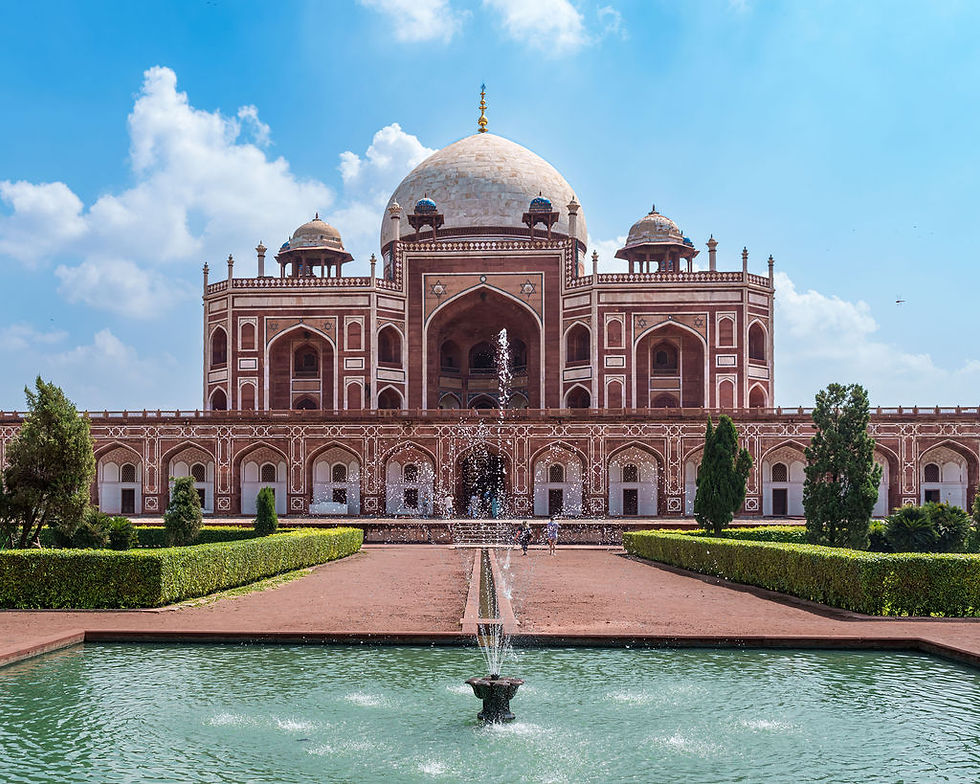
Mausoleum of Emperor Humayun. Our next stop was Humayun's Tomb, another UNESCO World Heritage Site and one of Delhi's architectural highlights. Built in the 16th century at the request of Emperor Humayun's widow, Empress Bega Begum, and designed by Persian architect Mirak Mirza Ghiyas, the monument combines Persian influences with Indian craftsmanship. Its formal gardens, intersected by water channels in the classic charbagh style, helped establish a new direction for Mughal architecture. Constructed from red sandstone with striking white marble details, the tomb is often regarded as a precursor to the Taj Mahal. The site also serves as the final resting place for more than 150 members of the Mughal royal family, making it one of the dynasty's most significant burial complexes.
Old Dehli. For lunch, we ditched our driver and met up with a specialty tour guide for a food tour of Old Dehli. But first, a rickshaw ride:
It may be obvious, but we suggest hiring a tour guide for a food tour. We only visited the best (and safest) street vendors. We paused for a sit-down meal (see photo below), which was delicious, and truthfully, we would never have discovered it on our own since it was nestled in the heart of the bustling street market.
Scenes from Old Dehli.
Jama Masjid. After lunch, we stopped at Jama Masjid, the impressive mosque commissioned by Mughal Emperor Shah Jahan in the mid-1600s for his new city of Shahjahanabad, now Old Delhi. Built from red sandstone and white marble, the mosque's enormous courtyard can hold thousands of worshippers and offers sweeping views of the crowded streets below. For more than three and a half centuries, generations of rulers, merchants, pilgrims, and visitors have passed through its gates. Women must wear coverings, which are offered at the entrance, and cover their heads.
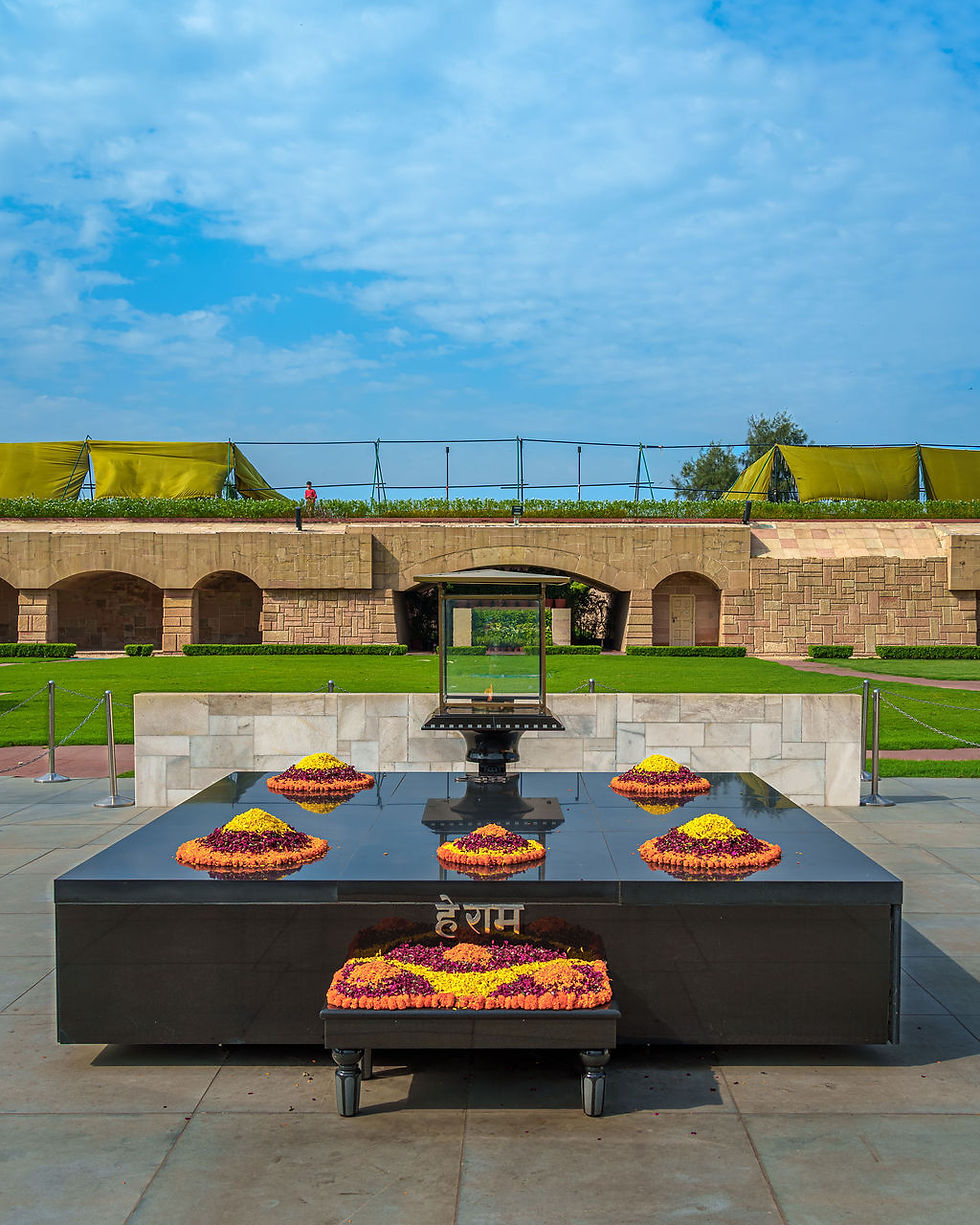
Our last stop of the day was Raj Ghat, the memorial honoring Mahatma Gandhi. A simple black marble platform marks the site of his cremation following his assassination in 1948, with an eternal flame burning beside it. Surrounded by peaceful gardens, the memorial's understated design reflects Gandhi's lifelong commitment to simplicity while commemorating his pivotal role in India's struggle for independence.
Here is our full day video of our time in Delhi.


Comments