


London, England (Day 2): A Day on Foot Through History and Iconic Landmarks

Summary. On our second day in London, we set out on an all-day exploration, seeing the city entirely on foot. We kicked things off with a scenic walk across Westminster Bridge, then made our way to the grandeur of Buckingham Palace and the historic Horse Guards Parade. From there, we stepped into the awe-inspiring Westminster Abbey before diving deep into history at the Churchill War Rooms. The journey continued through the vibrant energy of Trafalgar Square, and we wrapped up the day in the lively streets of Covent Garden, after which we walked backed to the hotel visiting an unexpectedly memorable graffiti art display.
[This blog is part of our 15-days in the British Isle trip].
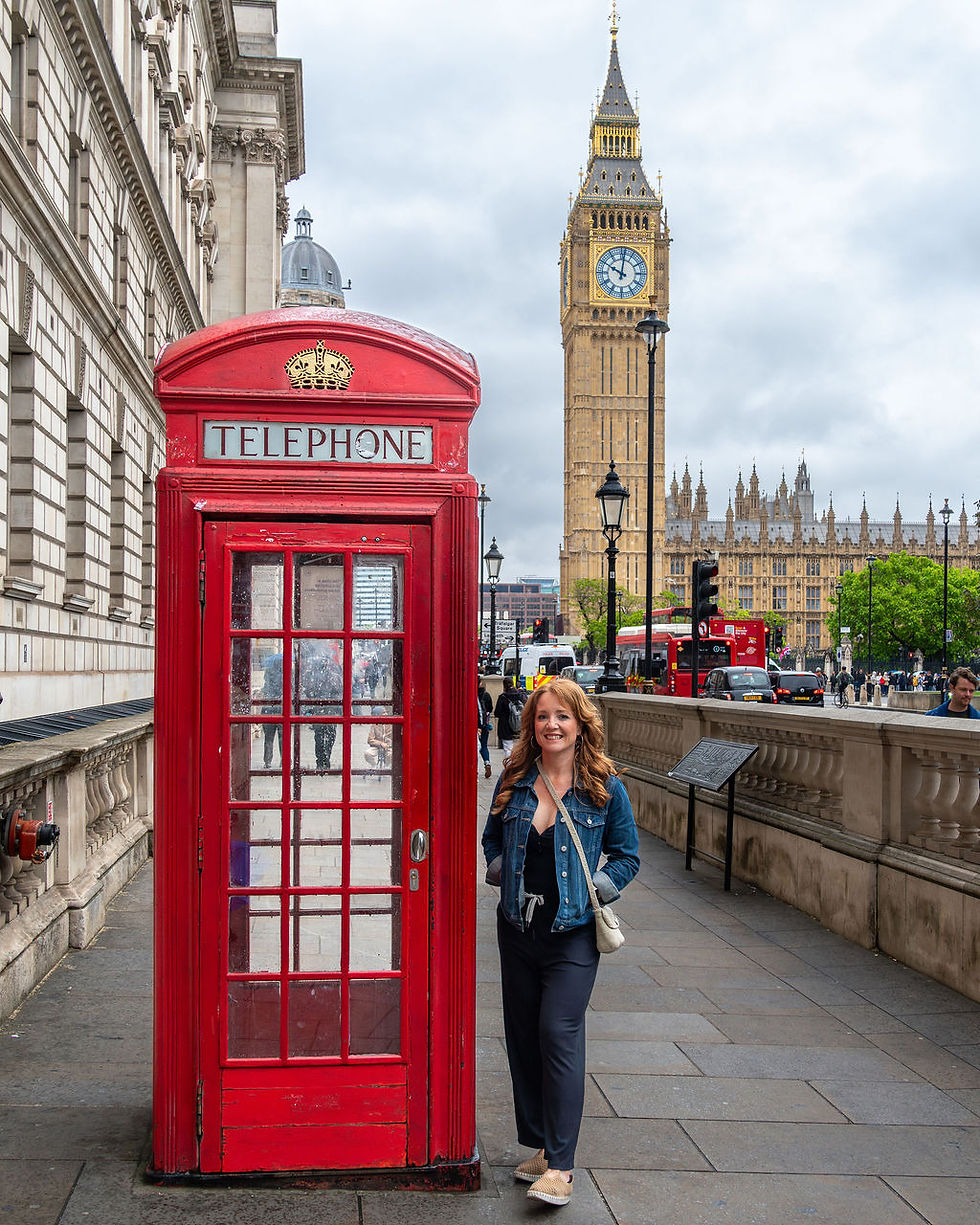
Westminster Bridge. Walking across Westminster Bridge feels like stepping into the heart of London, where history and motion meet. The current bridge, opened in 1862, replaced earlier versions dating back to 1750, once the first crossing over the Thames in central London for centuries. Its green-painted ironwork was chosen to match the seats in the House of Commons nearby, tying it visually to the Palace of Westminster that rises beside you in Gothic detail. Big Ben’s clock tower stands watch, its presence both grand and reassuring. As you walk, red buses rumble past and people pause at the railings to take in the view: the London Eye turning slowly on one side, the historic Parliament on the other.
Buckingham Palace. We next walked over to see the exterior of Buckingham Palace. The Palace has a grand, symmetrical exterior made of pale stone, featuring the famous central balcony, tall windows, and classical details that emphasize its scale and elegance, with the Victoria Memorial and ornate black-and-gold gates enhancing its ceremonial setting. Originally built in 1703 as Buckingham House for the Duke of Buckingham, it was later acquired by King George III in 1761 as a private residence before being expanded and transformed into a royal palace by King George IV in the early 19th century, eventually becoming the official London residence of the British monarch under Queen Victoria in 1837.
Horse Guard Parade. Horse Guards Parade is a historic ceremonial ground on Whitehall that has evolved from a 16th‑century jousting arena for Henry VIII into the centerpiece of British royal and military pageantry. Over time it became a key military site, especially after the Restoration in 1660, and the current surrounding buildings date from the 18th century when it served as British Army headquarters. Today it is best known for hosting major events such as Trooping the Colour, the annual celebration of the monarch’s official birthday, as well as daily cavalry guard ceremonies that preserve traditions more than 300 years old, making it a living symbol of Britain’s royal heritage and military history. The main daily ceremony at Horse Guards Parade is the Changing of the King’s Life Guard, which takes place at 11:00 am Monday to Saturday and 10:00 am on Sundays.
Westminster Abbey. Next, we returned to Westminster Abbey, once more admiring the view of Big Ben along the way. Westminster Abbey is a historic Gothic church in London, England, known for its striking architecture, including vaulted ceilings and stained glass. Built mainly in the 13th century, it has been the site of British coronations since 1066 and has hosted many royal events. The Abbey also serves as the burial place for numerous monarchs and notable figures such as Isaac Newton and Charles Darwin, making it both a working place of worship and a symbol of British history and tradition.
Westminster Arms. Next had a little time to kill before our timed entry at Churchill War Rooms so we enjoyed a pint at Westminster Arms. This traditional British pub is just a short walk from Westminster Abbey and the Houses of Parliament. Dating back to the early 20th century, it combines historic charm with a lively, political atmosphere, as it is frequented by MPs, and journalists. The pub features wood‑paneled interiors, a compact ground-floor bar, a cozy basement wine bar with booths, and an upstairs dining room.
Churchill War Rooms. The Churchill War Rooms are a historic underground bunker in Westminster, London, built in 1938 beneath government offices to protect Britain’s leadership during World War II. From 1939 to 1945, they served as the secret headquarters where Prime Minister Winston Churchill and his War Cabinet directed the nation’s war effort, especially during the Blitz, with staff working around the clock in rooms such as the Map Room and Cabinet Room. After the war ended in August 1945, the bunker was sealed and left largely untouched, preserving it as a time capsule of wartime decision-making. Today, it is part of the Imperial War Museum and open to the public, allowing visitors to explore the original rooms and learn about Churchill’s leadership and Britain’s role in the Second World War. This is a "must-do," in our opinion.
Trafalgar Square. We next walked down to Trafalgar Square to see this famous public square in the center of London. Built in the early 19th century and officially opened in 1844 on the site of former royal stables at Charing Cross, it was named to commemorate Britain’s victory at the Battle of Trafalgar in 1805, where Admiral Horatio Nelson defeated the French and Spanish fleets but was killed in the battle. The square is dominated by Nelson’s Column, a tall monument erected in the 1840s and surrounded by four bronze lion statues, fountains, and other sculptures. Surrounded by landmarks such as the National Gallery and St Martin‑in‑the‑Fields, Trafalgar Square has long served as a central gathering place for celebrations, public events, and political demonstrations, making it a key symbol of London’s cultural and historical life.
Covent Garden. Our final stop of the day was in Covent Garden. Here we window shopped and enjoyed a dinner in a small Indian restaurant. Covent Garden is a lively district known for its historic market, vibrant street performances, and mix of shops, restaurants, and theaters.
Walk Back to Hotel. After dinner we walked back to our hotel and enjoyed some great people watching. A highlight though, was unexpectedly walking into a tunnel of graffiti art.
Video of Our Day 2. Here is a video of our Day 2 in London - the whole day on foot!


I checked out the details on the latest regional sports initiative, and the clear vision behind Tropica Casino https://tropical-casino.com/ really grabbed my attention. I initially expected another standard setup, but it is actually focused on building deep community ties and providing real opportunities for emerging talent to showcase their skills. The way they have structured the program to bridge the gap between amateur play and professional interest is impressive. It is not just about the games themselves, but about creating a lasting impact on local athletic development. Seeing such a well-defined path for players to advance is refreshing, and it definitely feels like a project that is built to last beyond just a single season.